Concrete & Sitework
Pads for machinery, storage containers and site equipment at plants, campuses and commercial properties across the Inland Empire and Southern California.
Why it is its own trade
An equipment pad fails in ways ordinary flatwork does not. If it is out of level, the machine will not install. If the anchors are off, the install crew ends up drilling into new concrete. If the subgrade was never compacted, the pad settles under load and takes the equipment with it.
NexGen self-performs equipment pads from layout to finish. We work from the manufacturer's cut sheet or your engineer's detail, form to the footprint and elevation the equipment calls for, and sort out anchor bolts, embeds and conduit stub-ups before the concrete truck is on site.
The pad can go on open ground, or inside an existing slab or parking lot. In that case we sawcut and remove what is there and tie the new concrete into the surface around it.
On the job
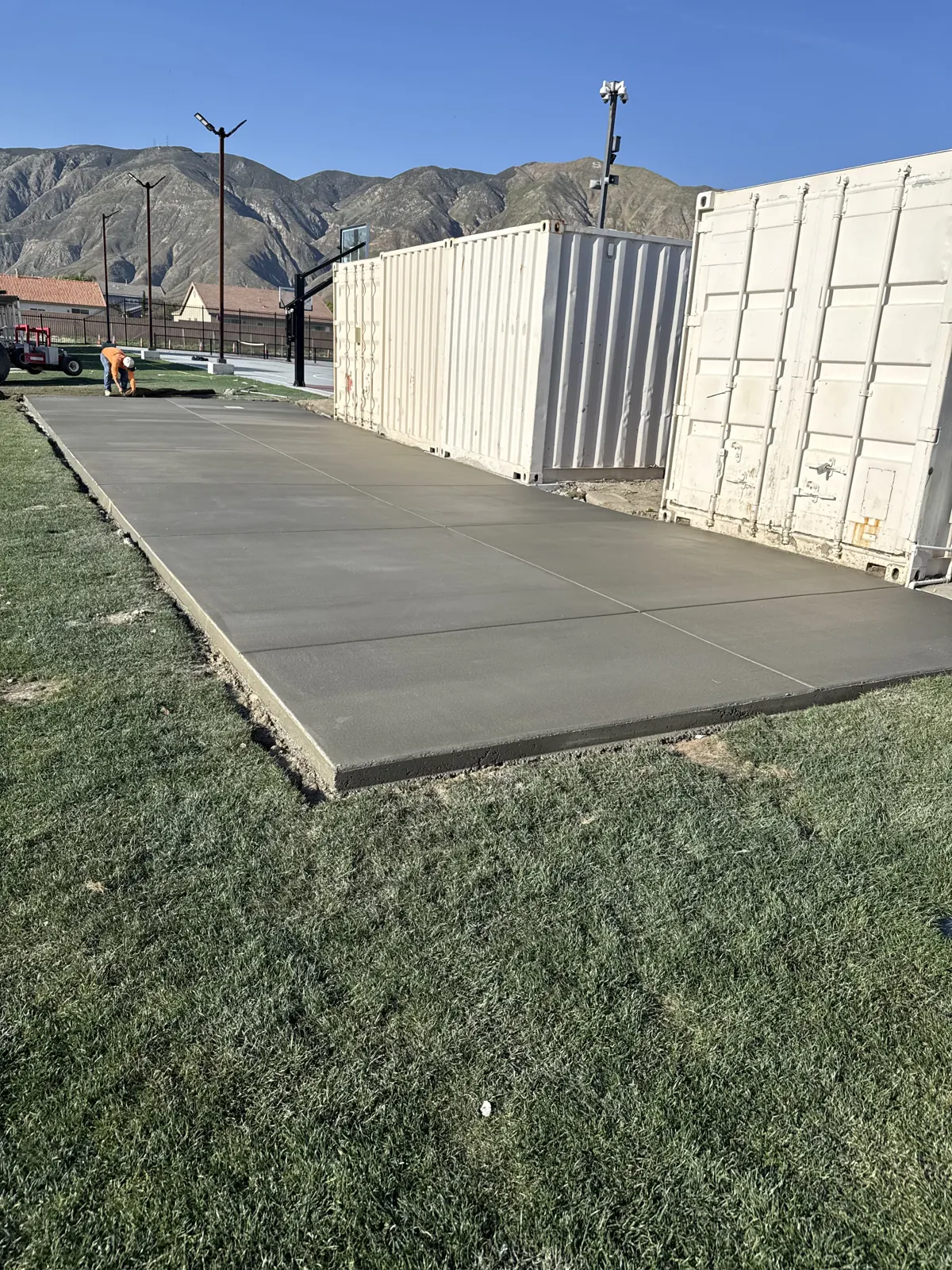
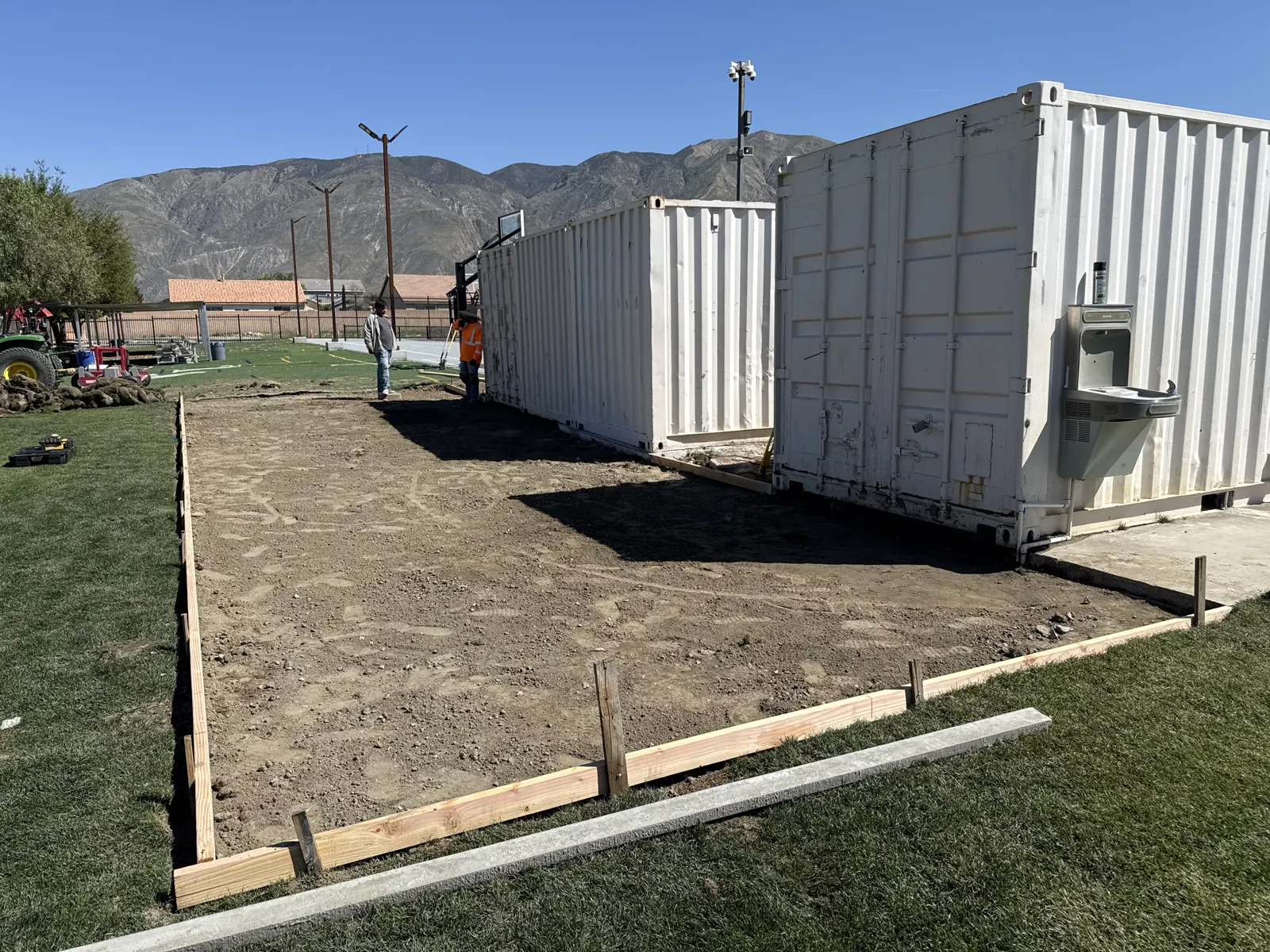
The same pad at San Jacinto Valley Academy, before and after the pour. It sits alongside the storage containers on an active K-12 campus, so the work was phased around school operations.
Questions we get
It depends on the equipment. The manufacturer's installation guide normally states the tolerance, and that number is what the pad gets formed and finished to. Send us the cut sheet and we will bid to it.
Yes. We sawcut and remove the existing asphalt or concrete, prepare the subgrade and pour the new pad so it ties in with the surface around it. That is how the Raising Cane's pad in Hemet was built.
Concrete gains strength over time, and how soon it can take load depends on the mix and the weight going on it. Tell us the install date up front and we plan the pour around it.
We coordinate licensed electrical contractors as part of the build, so conduit and power tie into the concrete work on one schedule with one accountable contractor.
Send us the scope and we'll get you a bid.
